The German Research Foundation (Deutsche Forschungsgemeinschaft, DFG) is funding a new international research collaboration “Hydrogen influence on Cr-Si alloys”. The project is led by the DUAG member Dr. Nataliya Yadzhak at the University of Bayreuth in cooperation with Prof. Dr. Olga Zvirko and Prof. Dr. Hryhoriy Nykyforchyn at the Karpenko Physico-Mechanical Institute of the National Academy of Sciences of Ukraine in Lviv. The project is funded within the DFG call for research grants in cooperation with international partners and the special programme for Ukrainian principal investigators.
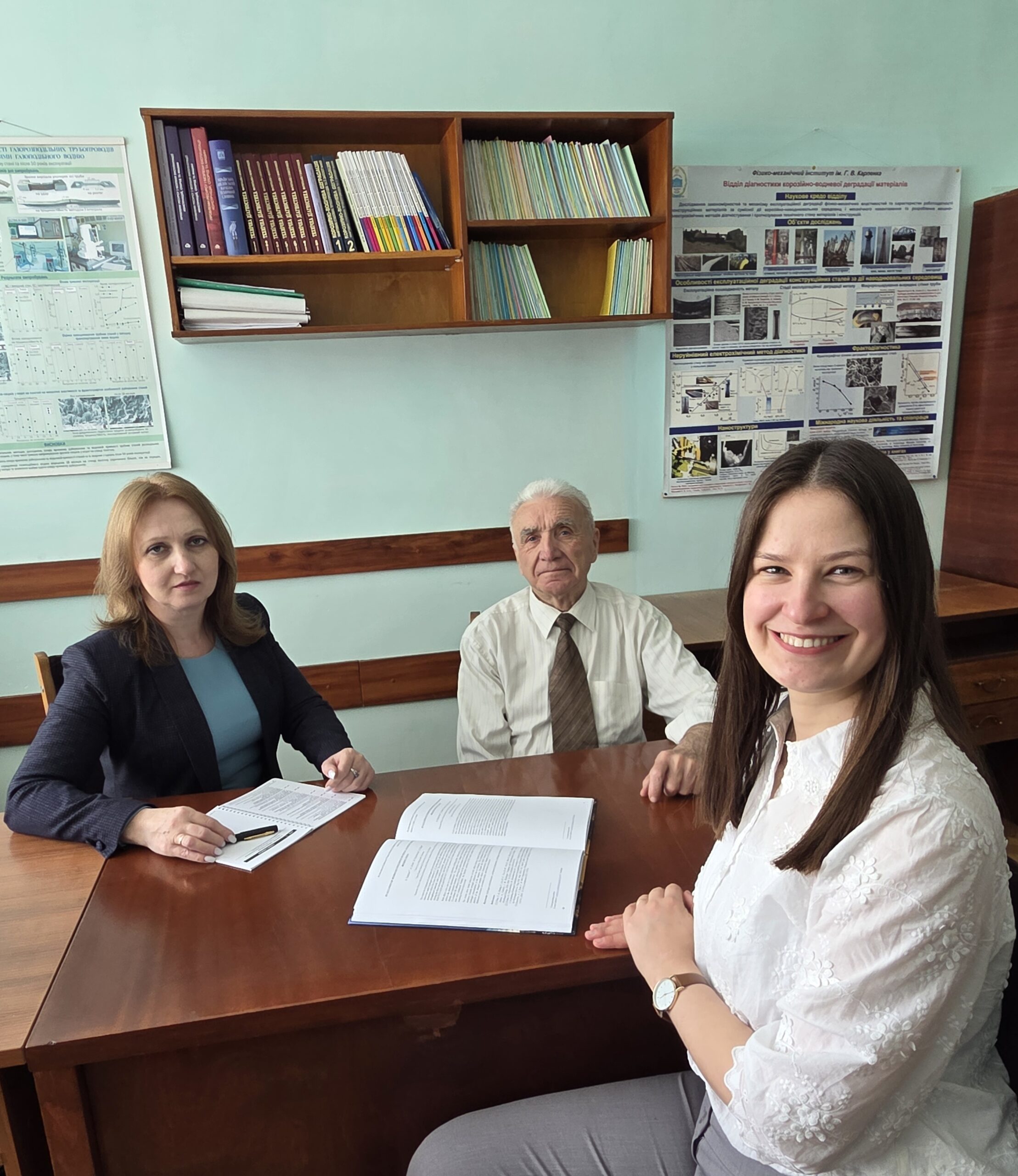
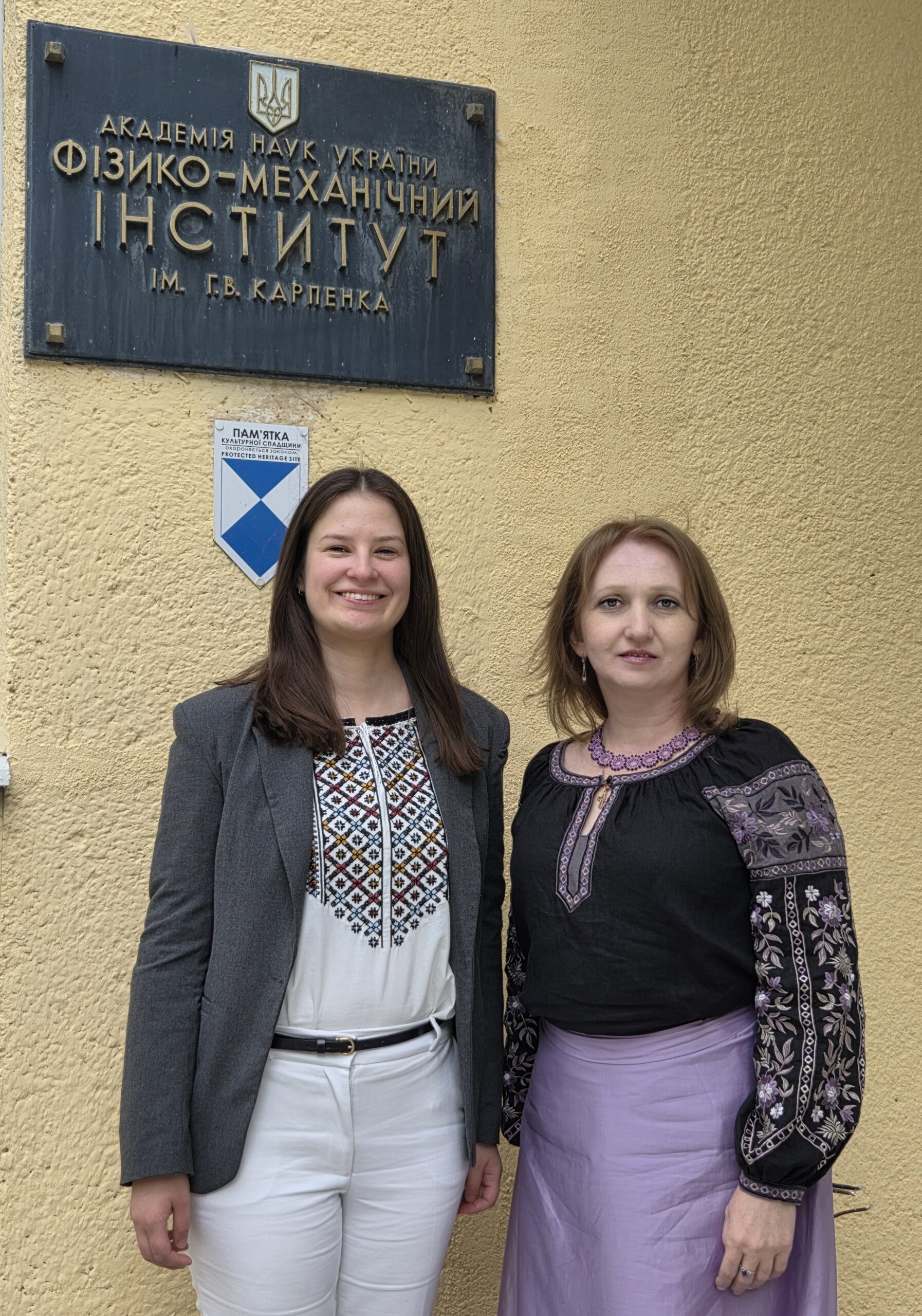
Prof. Olha Zvirko, Prof. Hryhoriy Nykyforchyn and Dr. Nataliya Yadzhak at the Karpenko Physico-Mechanical Institute. (Photo: Private)
The project investigates the fundamental aspects of how hydrogen affects the mechanical properties of alloys containing chromium and silicon. Hydrogen is expected to play a key role in a future climate-neutral economy and is also considered an important component of EU energy security. At the same time, a hydrogen environment can strongly influence the behaviour of an alloy and shorten the lifetime of structural elements. Hydrogen-assisted damage is a degradation mechanism that occurs in many industries, especially in the oil and gas and the chemical industries. A better understanding of these processes at a fundamental level is a prerequisite for choosing and developing materials that stay reliable in hydrogen-related applications.
In the collaboration, the Chair of Metals and Alloys at the University of Bayreuth led by Prof. Dr.-Ing. Uwe Glatzel and Prof. Dr.-Ing. Silvia Ulrich contributes its expertise on the mechanical behaviour and microstructure of metallic materials. The Ukrainian partners from the Department of Diagnostics of Materials Corrosion-Hydrogen Degradation at the Karpenko Physico-Mechanical Institute add many years of experience in hydrogen-related degradation of materials.
Funding through the DFG Special Programme for Ukrainian Principal Investigators allows to further strengthen the scientific ties between German and Ukrainian research institutions. In 2026, the DFG Joint Committee approved a two-year extension of this programme, until the end of August 2028.